


Cold Therapy Machine vs. Ice Pack After Knee Surgery: What's the Difference?
Written by Stephen Khentigan, CEO, My Cold Therapy · Reviewed by Dr. Dina Khentigan, DNP · Last updated November 19, 2026
Quick answer: Both an ice pack and a cold therapy machine cool your knee after surgery. An ice pack is cheap but warms as it melts and needs frequent swaps. A machine pumps ice water through a pad for hours at a steadier temperature. Research has not shown machines work better after knee replacement. The differences are cost, convenience and temperature control.
Watch: Gel Packs vs Cold Therapy Machines | Which Actually Works Better?
What is the difference between a cold therapy machine and an ice pack?
An ice pack is anything cold you hold on the knee: a bag of ice, a frozen gel pack, or a gel wrap with straps. You freeze it, wrap it in a thin cloth, use it, then refreeze or replace it.
A cold therapy machine (also called an ice machine or cold therapy unit) is a small cooler you fill with ice and water. A pump moves cold water through tubing to a pad wrapped around your knee, then back to the cooler. The Breg Polar Care Cube, Breg Polar Care Kodiak and DonJoy IceMan Clear3 all work this way. Some systems, like the Aircast Cryo/Cuff IC, add compression.
Both deliver cold. Your surgeon decides whether you use cold therapy, for how long, and how often.
How do they compare side by side?
| Feature | Ice or gel pack | Cold therapy machine |
|---|---|---|
| How it cools | Frozen pack held on the knee over a cloth | Pump circulates ice water through a pad |
| Cooling capacity | Typically used in short sessions | Ice and water may remain cold for 6–8 hours per fill, depending on model and conditions [10] |
| Recommended treatment duration | Follow surgeon's instructions | Follow surgeon's instructions and device-specific safety requirements |
| Temperature | Coldest at first, then warms | More even pad temperature while the ice lasts |
| Power | None | Wall outlet (Kodiak has an optional battery pack) |
| Fit on the knee | Can slide on a bent knee | Pad shaped to wrap the knee |
| Moving around | Fully portable | Connected to the cooler by tubing |
| Upfront cost | Low | About $170 to $219 for a knee system at My Cold Therapy |
How much does each option cost?
Ice packs cost the least. A bag of ice or a reusable gel pack may already be in your freezer. A strap-on gel wrap made for the knee, like the SMI Cold + Compression Knee Wrap, is $66.95 at My Cold Therapy.
Machines cost more upfront. Knee system prices at My Cold Therapy as of November 19, 2026:
| Knee system | What's included | Price |
|---|---|---|
| Aircast Cryo/Cuff IC with knee cuff | Cooler and knee cuff; cold plus automatic compression | $169.99 (sale) |
| DonJoy IceMan Clear3 | Cooler and one wrap-on pad (choose the McGuire knee pad) | $184.99 |
| Breg Polar Care Cube with knee pad | Cooler and one WrapOn knee pad (Regular, Large or XL) | $188.00 |
| Breg Polar Care Kodiak with knee pad | Cooler and one Intelli-Flo knee pad | $219.00 |
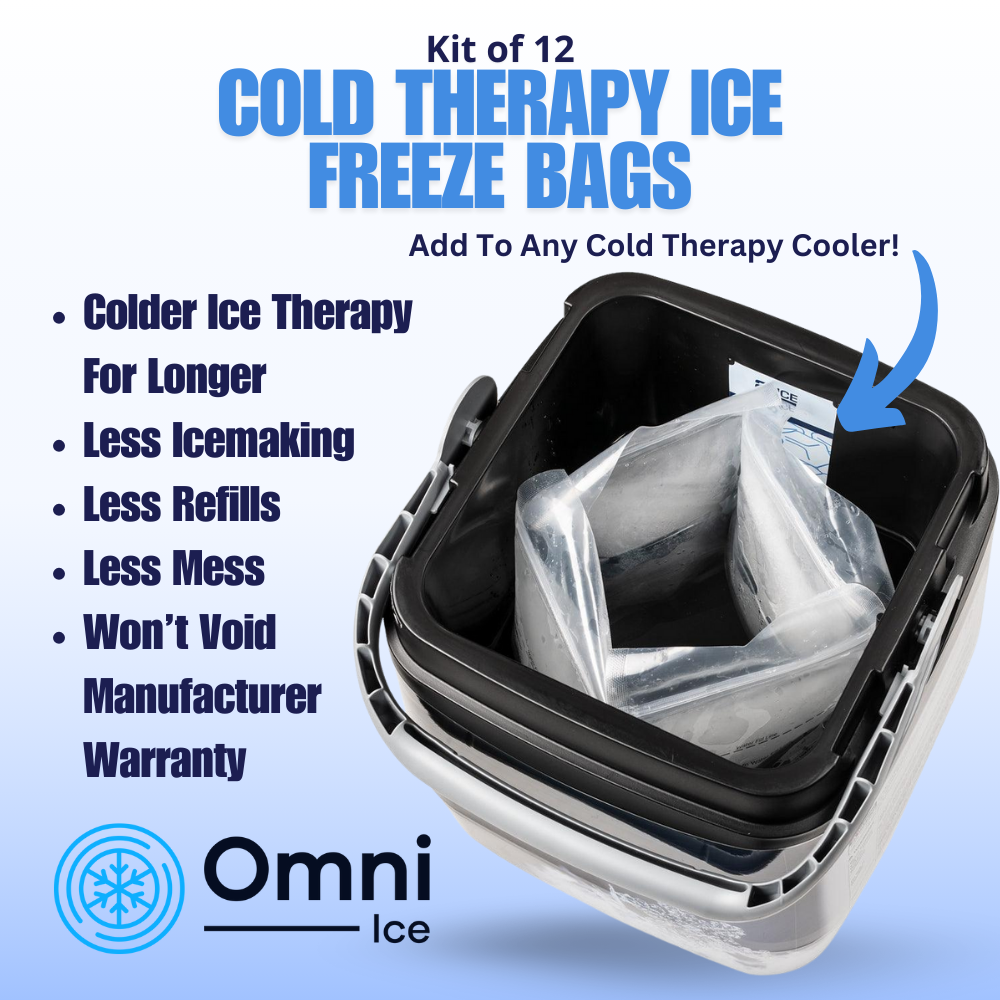
Plan for small ongoing costs with either choice: ice, and a skin barrier or sterile dressing under the pad. Reusable Omni Ice freeze bags ($19.99 for 12) replace bagged ice in a machine; see how they work.
Does insurance or an HSA/FSA pay for a cold therapy machine?
Insurance usually does not. Medicare's coverage rules deny water-circulating cold pads with a pump (code E0218) as not medically necessary. [6] Many private plans call these devices convenience items. One Blue Cross Blue Shield policy says active cooling systems have not shown "a benefit beyond convenience." [7] Call your plan before you count on coverage.
HSA and FSA funds are different. Many plans accept a cold therapy device as a medical expense, often with a letter of medical necessity and an itemized receipt. Rules vary, so check with your plan administrator. Our videos explain how an HSA works and how an FSA works, and you can browse HSA/FSA cold therapy products here.
Which is easier to use at home after knee surgery?
An ice pack needs no setup. But you have to swap it often, and in the first days, getting to the freezer with a walker is hard. If you don't have a helper at home, that matters. Our guide to preparing for knee replacement surgery covers getting your home and recovery plan ready before surgery.
A machine runs for hours on one fill, so you can rest while it works. The trade-offs: it needs a spot near an outlet, the tubing can catch a walker or a foot, and the cooler needs draining, refilling and regular cleaning. Our cold therapy machine cleaning and maintenance guide covers the upkeep. Do a practice run before surgery day with the setup video for your machine: Cube, Kodiak or Clear3. Route the tubing away from your walking path.
Many people use both. They use the machine while resting at home and a gel wrap, like the Omni Ice Ultimate Cold + Compression Gel Wraps, for the car ride or after physical therapy.
How do they handle temperature?
An ice pack is coldest when it comes out of the freezer, then warms as it melts or thaws. Cleveland Clinic recommends a barrier, such as a washcloth, under any ice pack and says "the maximum icing time shouldn't extend past 20 minutes." [8]
A machine keeps cold water moving, so the pad stays at a more even temperature while the ice lasts. Breg describes the Cube as giving uniform pad temperature, and says the Kodiak's Intelli-Flo pads provide temperature control specific to each pad. [10] DonJoy's instructions list the IceMan Clear3 without a thermometer or temperature control.
Colder is not better. Breg warns that its therapy "can be cold enough to seriously injure skin." [9] A steadier temperature also means longer time in the cold, which is why skin checks matter with a machine.
What safety steps apply to both?
The same rules protect your skin whichever one you use:
- Never put cold directly on skin. Use a thin cloth under an ice pack. Under a machine pad, use a skin barrier or the sterile dressing your surgeon recommends.
- Check your skin often. Breg advises lifting the pad edge to check the skin about every 1 to 2 hours. [9] Check under an ice pack during each session.
- Stop and call your surgeon if you see blisters or white, gray or blue skin, or feel burning or increased pain.
- Take extra care if your leg is numb from a nerve block. You may not feel the cold getting too strong.
- Ask first if you have a higher risk. Breg lists Raynaud's, diabetes, poor circulation, cold sensitivity and smoking among risk factors for cold injury. [9]
- Use cold therapy only while you are awake and able to check your skin.
- Keep your skin checkable. Don't cover the pad with a brace or wrap that keeps you from looking underneath.
Using a Kodiak? It needs its own Kodiak skin barriers or Intelli-Flo sterile dressings. For the IceMan Clear3, see DonJoy IceMan sterile dressings.
Which one should you choose?
Neither choice is right for everyone. Start with your surgeon's plan, then match your situation. If you decide on a machine, our guide to the best cold therapy ice machines for knee surgery compares the main options.
| Your situation | Good fit |
|---|---|
| Your surgeon named a product or schedule | Follow your surgeon's instructions |
| Tight budget or a quick, simple recovery | Ice pack or a strap-on gel wrap |
| Knee replacement and little help at home | A machine like the Breg Polar Care Cube or DonJoy IceMan Clear3, which cuts trips to the freezer |
| Your surgeon wants cold plus compression | Aircast Cryo/Cuff IC, Breg Polar Care Wave, Omni Ice Pulse Compression |
| You want the pad to set the flow for you | Breg Polar Care Kodiak with an Intelli-Flo knee pad |
| Raynaud's, diabetes with nerve damage, or poor circulation | Ask your surgeon before using any cold therapy |
Deciding between Breg models? Breg Polar Care Cube vs. Wave vs. Kodiak explains how they differ.
Frequently asked questions
Is a cold therapy machine better than ice after knee replacement?
Research has not shown that machines lead to better results than ice packs. What a machine offers is hours of steadier cold without swapping packs. Watch: Gel Packs vs Cold Therapy Machines.
How long can I keep an ice pack on my knee?
Common home guidance is about 20 minutes at a time, with a cloth between the pack and your skin. [8] Follow your surgeon's schedule if it differs.
How long does a cold therapy machine stay cold?
Breg rates the Polar Care Cube and Kodiak at 6 to 8 hours of cold per fill of ice and water. [10] That is how long the ice lasts, not how long to wear the pad.
Can I put an ice pack or machine pad right on my skin?
No. Always use a cloth, skin barrier or sterile dressing. Watch: Proper Skin Barrier Setup for the McGuire Knee Pad.
Can I use an HSA or FSA for a cold therapy machine?
Often, yes, though some plans ask for a letter of medical necessity. Check your plan administrator's rules first.
Can I use both a machine and ice packs?
Yes, if your surgeon agrees. Many people use a machine at home and a gel wrap on the go.
What knee pad size do I need for the Breg Polar Care Cube?
The Cube knee pad comes in Regular, Large and XL. Shop Breg Polar Care Cube replacement pads, and see our Breg Polar Care pad compatibility guide. Watch: How to Pick the Right Breg Polar Care Cube Knee Pad Size.
Shop knee cold therapy at My Cold Therapy
Machines
- Breg Polar Care Cube with knee pad
- Breg Polar Care Kodiak with knee pad
- DonJoy IceMan Clear3 with wrap-on pads
- Aircast Cryo/Cuff IC with knee cuff
Replacement pads and cuffs
- Breg Polar Care Cube replacement pads
- Breg Kodiak Intelli-Flo replacement pads
- DonJoy McGuire knee pad for the IceMan Clear3
- Aircast Cryo/Cuff replacement cuffs
Skin protection
- Omni Ice non-sterile skin barriers (Cube)
- Skin barriers for the Breg Kodiak
- Breg Polar Care Cube sterile dressings
- Breg Intelli-Flo sterile dressings (Kodiak)
- DonJoy IceMan Clear3 sterile dressings
Ice packs, wraps and accessories
- SMI Cold + Compression Ice Wraps
- Omni Ice Ultimate Cold + Compression Gel Wraps
- Omni Ice freeze bags (kit of 12)
- Omni Ice carry bag
- All HSA/FSA cold therapy products
Related articles
- Best Cold Therapy Ice Machines for Knee Surgery: A Complete Buyer's Guide
- Aircast Cryo/Cuff vs. Breg Polar Care: Which Is Better for Knee Recovery?
- Breg Polar Care Cube vs. Wave vs. Kodiak: Which System Should You Choose?
- DonJoy IceMan Classic3 vs. Clear3: Differences, Compatibility, and Which Should You Buy?
- Which Breg Polar Care Pads and Parts Fit My Machine?
- 10 Common Mistakes People Make with Ice Therapy
- How to Transition from Ice Therapy to Active Therapy
This article is for education only and is not medical advice. Cold therapy has risks. Follow your surgeon's instructions and the manufacturer's current instructions for use.
References
- Aggarwal A, Adie S, Harris IA, Naylor J. Cryotherapy following total knee replacement. Cochrane Database of Systematic Reviews. 2023;(9):CD007911.
- Liang Z, Ding Z, Wang D, et al. Cryotherapy for rehabilitation after total knee arthroplasty: a comprehensive systematic review and meta-analysis. Orthopaedic Surgery. 2024;16(12):2897–2915.
- Liu M-M, Tian M, Luo C, Wang S, Shao L. Continuous cryotherapy vs. traditional cryotherapy after total knee arthroplasty: a systematic review and meta-analysis of randomized controlled trials. Frontiers in Surgery. 2023;9:1073288.
- Brouwers HFG, de Vries AJ, van Zuilen M, van Kouswijk HW, Brouwer RW. The role of computer-assisted cryotherapy in the postoperative treatment after total knee arthroplasty: positive effects on pain and opioid consumption. Knee Surgery, Sports Traumatology, Arthroscopy. 2022;30(8):2698–2706.
- Wyatt PB, Nelson CT, Cyrus JW, Goldman AH, Patel NK. The role of cryotherapy after total knee arthroplasty: a systematic review. Journal of Arthroplasty. 2023.
- Centers for Medicare & Medicaid Services. Local Coverage Determination: Cold Therapy (L33735).
- Blue Cross & Blue Shield of Rhode Island. Cooling Devices Used in the Home and Outpatient Setting (medical policy).
- Cleveland Clinic. How Long Should You Ice an Injury? December 18, 2024.
- Breg. Polar Care cold therapy instructions for use.
- Breg. Cold therapy products: Polar Care Cube and Kodiak.
- Enovis/DonJoy. IceMan CLEAR3, CLASSIC and CLASSIC3 instructions for use.