


Aircast Cryo/Cuff vs. Breg Polar Care: Which Is Better for Knee Recovery?
Written by Stephen Khentigan, CEO, My Cold Therapy · Reviewed by Dr. Dina Khentigan, DNP · Last updated November 17, 2026
Quick answer: Neither machine is better for every knee. The Aircast Cryo/Cuff pairs cold with automatic intermittent compression from a water-filled cuff. Breg Polar Care machines like the Cube pump ice water through the pad nonstop for steady cold. Pick the one that fits your surgeon's plan, your budget, and your home setup.
What is the difference between the Aircast Cryo/Cuff and Breg Polar Care?
Both use a cooler of ice water and a pad that wraps your knee. The difference is how the water moves and whether you get compression.
- Aircast Cryo/Cuff IC: A pump in the cooler lid moves ice water to and from an anatomically shaped knee cuff. Aircast says the IC exchanges chilled, pressurized water between the cuff and cooler on a cycle, so you get cold plus intermittent compression. It plugs into the wall.
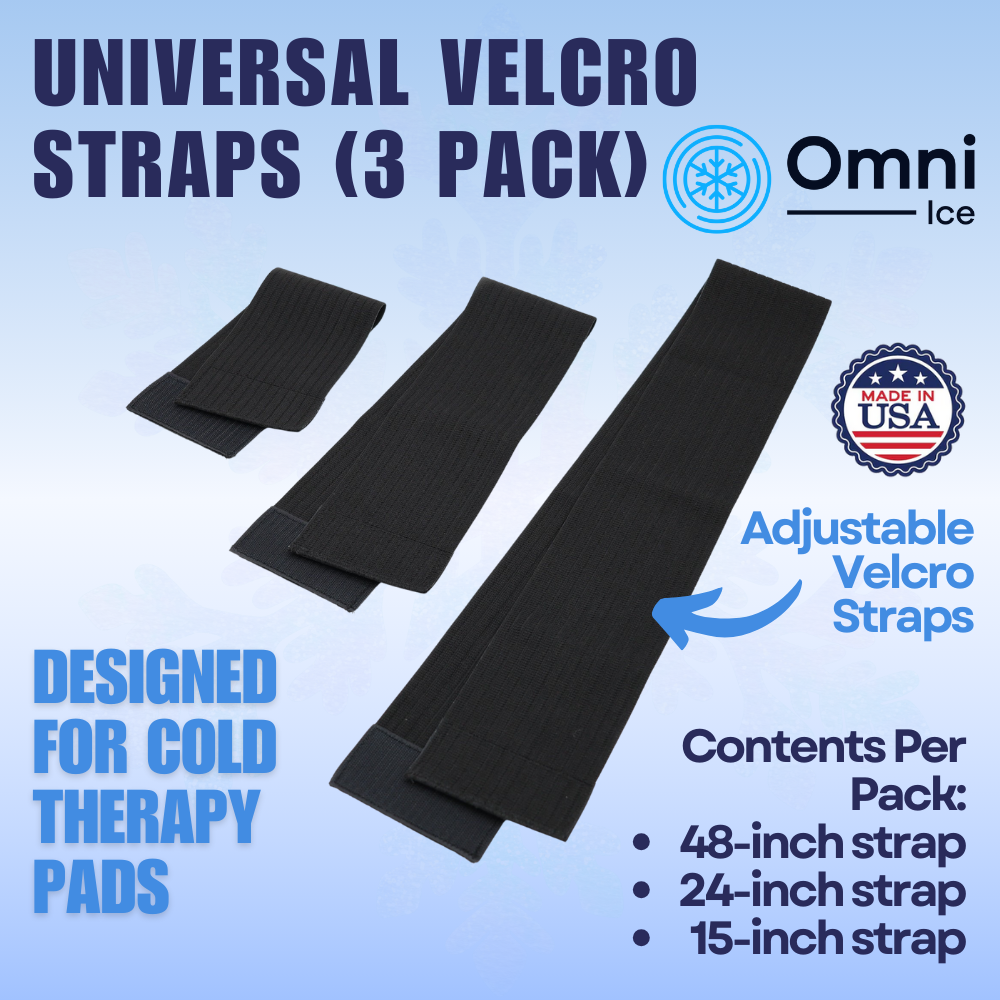
- Breg Polar Care Cube: A motor pumps ice water through the pad and back to the cooler without stopping. Breg says the high flow rate keeps the pad temperature even. It's a cold-only machine. The elastic straps hold the pad in place, but there's no pumped compression.
How do they compare side by side?
| Aircast Cryo/Cuff IC | Breg Polar Care Cube | |
|---|---|---|
| How water moves | Pump in the lid, on a cycle | Pump, nonstop |
| Compression | Yes, intermittent | No (straps only) |
| Power | Wall plug | Wall plug |
| Cold per fill | 6 to 8 hours | 6 to 8 hours |
| Temperature setting | None listed | None; on/off only |
| Knee sizes | Small 10"–19", Medium 18"–23", Large 20"–31" (measured 6" above the kneecap) | Regular, large, and XL WrapOn knee pads |
| Price at My Cold Therapy (knee) | $169.99 with knee cuff | $188.00 with knee pad ($145.00 cooler only) |
Specs are from Aircast (Enovis) and Breg product pages and instructions for use. Cooler run times are the makers' estimates for one fill of ice, not how long to wear the pad. Prices are as listed in November 2026 and may change.
Which costs less, the Cryo/Cuff or a Breg Polar Care?
At My Cold Therapy, the Cryo/Cuff IC with a knee cuff costs a little less than the Breg Polar Care Cube with a knee pad. The Cube is also sold as a cooler only, for people who already have a pad.
Count the full cost, not just the cooler:
- Pads and cuffs. Aircast cuffs and Breg pads are not interchangeable, so plan on buying pads from the same brand as your machine: Aircast Cryo/Cuffs or Breg Cube replacement pads. Our Breg pad compatibility guide shows which Breg pads fit which machine.
- Skin barriers or sterile dressings. Breg requires an insulation barrier between the pad and skin, such as Breg Cube sterile dressings or Omni Ice skin barriers for the Cube. See why sterile dressings matter with cold therapy.
- Power supply. If a motorized unit's cord is lost, you'll need the right one. The Cryo/Cuff IC uses Aircast part 25-4882, the same power supply as the DonJoy IceMan Clear3. A replacement tube assembly and replacement lid are also available.
- HSA and FSA. Breg coolers and pads from My Cold Therapy are HSA and FSA eligible. Check with your plan about other products.
Watch: Aircast Cryo Cuff IC must-have accessories
Which one is easier to use at home after knee surgery?
The Cryo/Cuff IC and the Breg Cube both move the water for you once they're filled and plugged in, so there's nothing to lift or adjust between ice fills. With the Breg Cube, operation starts when you plug it in and stops when you unplug it. The trade-off is that you need to sit near an outlet, and you hear a quiet motor.
Getting up to walk: Aircast says its cuffs can be detached from the cooler at any time without interrupting treatment, which makes trips to the bathroom easier. Breg pads also disconnect from the hose.
Watch: How to use the Aircast Cryo Cuff IC · How to use the Breg Polar Care Cube
How do the Cryo/Cuff and Polar Care handle temperature?
The Cryo/Cuff IC has no temperature dial. Its cold comes from the ice water in the cooler, so the cuff gets less cold as the ice melts. Aircast says to refill with ice and water when the ice has melted.[8]
The Breg Cube keeps pumping water straight from the ice in the cooler, so the pad stays at a more even cold. It has no temperature dial.
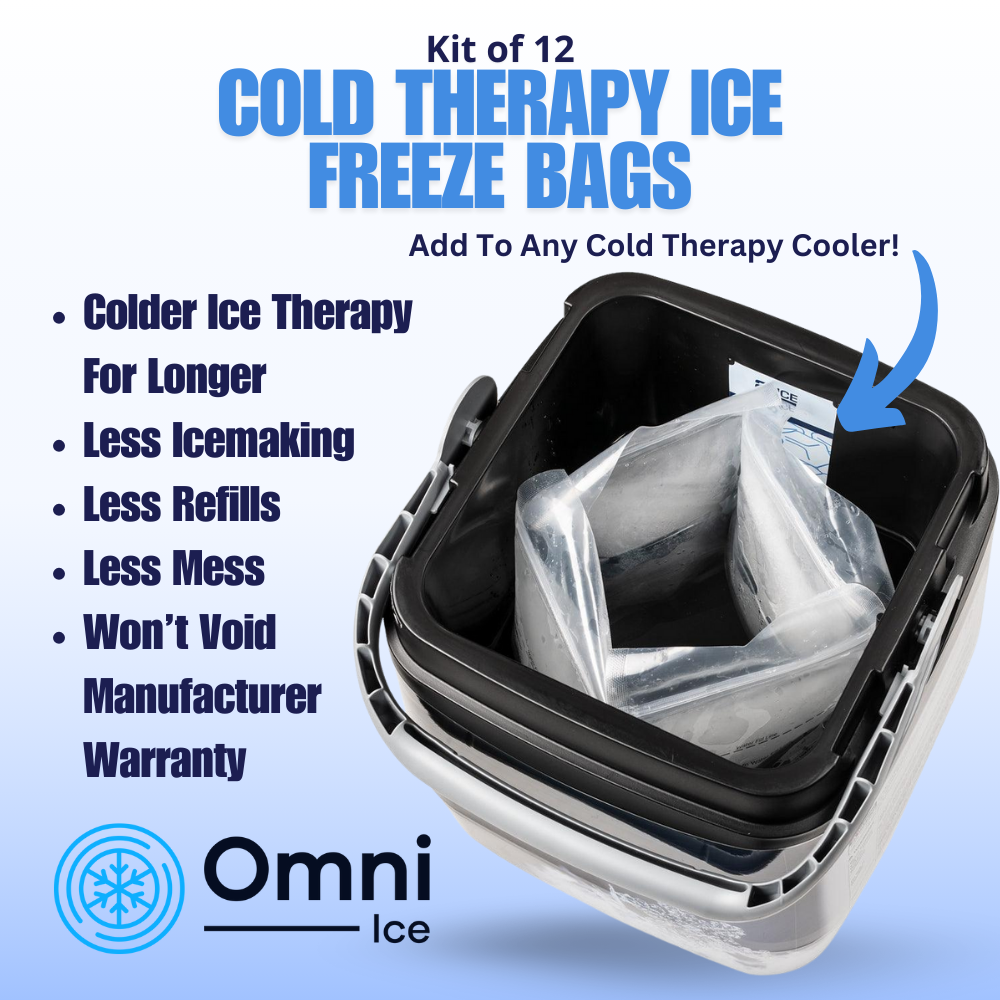
Either machine stays colder longer with larger blocks of ice. Many of our customers use reusable Omni Ice freeze bags in place of ice cubes.
Watch: Make your cold therapy machine run colder with freeze bags
Does compression matter for knee recovery?
Ask your surgeon. Here's what each machine offers:
- The Cryo/Cuff IC adds intermittent compression automatically. The pump pushes chilled water into the cuff and releases it on a cycle.
- The Breg Cube is cold only. The straps hold the pad snug but don't add pumped compression.
If your surgeon wants cold and compression, the Cryo/Cuff IC is a closer match than the Cube. Learn more about how intermittent compression works and static vs. dynamic compression.
Watch: Active compression explained
What does the research say about cold therapy after knee surgery?
Cold therapy in general. A Cochrane review of trials after total knee replacement found that cold therapy may slightly reduce blood loss and pain. The authors rated the evidence as low or very low quality and wrote that the benefits "may be too small to justify its use."[1] A 2024 review of newer trials found that cold therapy lowered pain, opioid use, and blood loss after knee replacement. In that review, continuous cold flow machines gave results similar to cold packs.[2]
Cold plus compression. A 2016 review of 10 trials (522 patients) found that people who used cold with compression after knee surgery tended to have less pain on days 2 and 3, and a trend toward less swelling early on. Later in recovery, the results were similar.[3] A 2024 trial of 40 knee replacement patients found that adding dynamic compression to cold therapy led to faster gains in knee bending, less swelling, and less pain during activity than cold packs alone.[4] After ACL surgery, patients who used a cold and compression device had better short-term pain relief than patients using ice packs and were more likely to have stopped narcotic pain medicine by 6 weeks.[5]
The Aircast Cryo/Cuff. In a 1994 trial after ACL reconstruction, patients who used the Cryo/Cuff had significantly less swelling, reported less pain, and used less pain medicine than patients who used ice bags. The authors pointed to the "advantages of continuous cold-compression therapy over cold alone."[6] In a 2025 trial of 108 knee replacement patients, the Cryo/Cuff reduced knee swelling at 72 hours more than a gel cold pack or a mobile cold compression device. Its pain and satisfaction scores were not better than the gel pack's, and the mobile device had the lowest pain scores early on.[7]
The Breg Polar Care Cube. We did not find a published trial that tests the Cube by name, or one that compares the Cryo/Cuff and the Cube head to head. The Cube is a motorized continuous cold flow machine, the type of device included in the 2024 review above.[2]
The bottom line: research supports cold therapy after knee surgery, and compression may help most in the first few days, but much of the evidence is low quality. Use the machine your surgeon recommends, safely and as directed.
Which one should you choose for your knee?
| Your situation | Good match |
|---|---|
| Your surgeon named a specific machine | The one they named |
| You want cold plus compression | Aircast Cryo/Cuff IC |
| You want steady cold with simple on/off use | Breg Polar Care Cube |
| You have Raynaud's, diabetes, or poor circulation | Talk to your surgeon before using any cold therapy |
For more options, see our guide to ice machines for knee surgery, our DonJoy IceMan Classic3 vs. Clear3 comparison, and cold compression vs. ice packs.
Watch: Which DonJoy or Aircast cold therapy machine is right for your surgery?
Who should not use a cold therapy machine?
Aircast's Cryo/Cuff IC instructions say not to use it if you have Raynaud's or other vasospastic disease, diabetes, sickle cell anemia, arteriosclerosis, cryoglobulinemia, clotting disorders, other conditions that cause poor circulation, a local infection, cold allergy, or a past cold injury.[8] Breg lists its own warnings in each machine's instructions and warns that the Cube "can be cold enough to cause serious injury, including full skin necrosis."[9]
Both brands' machines are prescription devices. Follow your surgeon's schedule for how long and how often to use cold. Aircast says to check your skin every 1 to 2 hours and to take at least a 20-minute break between 2-hour sessions.[8] Stop and call your care team if you notice burning, blisters, numbness that doesn't go away, or skin color changes. Take extra care after a nerve block, when you may not feel the cold well.
For more, read how to manage swelling after joint replacement and when to stop using cold therapy after surgery.
Frequently asked questions
Is the Aircast Cryo/Cuff or Breg Polar Care better after a knee replacement?
Neither is better for everyone. The Cryo/Cuff IC adds automatic intermittent compression. Breg Polar Care machines pump ice water for steady cold. Use the one your surgeon recommends, or match it to your needs at home.
Does the Aircast Cryo/Cuff IC need electricity?
Yes. The Cryo/Cuff IC has a pump built into the cooler lid and plugs into a wall outlet. The Breg Cube also plugs in.
Does the Breg Polar Care Cube have compression?
No. The Cube is a cold-only machine. Its elastic straps hold the pad in place but don't add pumped compression.
Can I use Breg pads on an Aircast Cryo/Cuff, or the other way around?
No. Aircast says to use only Aircast Cryo/Cuffs and ArcticFlow cuffs with the Cryo/Cuff IC.[8] Breg says to use only Breg cold therapy pads, because other pads may be colder and raise the risk of skin injury.[10] Buy pads from the same brand as your machine.
Watch: How to apply the Breg Polar Care Cube knee pad
What size Aircast knee cuff do I need?
Measure around your thigh 6 inches above the kneecap. The knee cuff comes in small (10 to 19 inches), medium (18 to 23 inches), and large (20 to 31 inches).
Watch: Aircast Cryo knee cuffs: sizing and how to apply
Do I need a prescription?
Both are prescription devices. Aircast's instructions say not to use the Cryo/Cuff IC without a prescription,[8] and Breg's instructions tell clinicians to provide a prescription with each Polar Care unit.[10]
Shop knee cold therapy at My Cold Therapy
- Aircast Cryo/Cuff IC Cooler with Knee Cuff
- Aircast Cryo/Cuff IC Cooler only
- Aircast Cryo/Cuff replacement cuffs
- Breg Polar Care Cube with knee pad
- Breg Polar Care Cube cooler only
- Breg Polar Care Cube replacement pads
- Breg Polar Care Cube sterile dressings
- Omni Ice freeze bags
- Breg Polar Care Cube with pad and sterile dressing
- All Breg Polar Care systems
Medical disclaimer: This article is for education only and is not medical advice. Cold therapy has risks and isn't right for everyone. Aircast and Breg cold therapy machines are prescription devices. Follow your surgeon's instructions and the manufacturer's current instructions for use.
References
- Adie S, Kwan A, Naylor JM, Harris IA, Mittal R. Cryotherapy following total knee replacement. Cochrane Database of Systematic Reviews. 2012;(9):CD007911. www.cochranelibrary.com
- Cryotherapy for rehabilitation after total knee arthroplasty: a comprehensive systematic review and meta-analysis. Orthopaedic Surgery. 2024;16(12):2897–2915. pmc.ncbi.nlm.nih.gov
- Song M, Sun X, Tian X, Zhang X, Shi T, Sun R, Dai W. Compressive cryotherapy versus cryotherapy alone in patients undergoing knee surgery: a meta-analysis. SpringerPlus. 2016;5(1):1074. pmc.ncbi.nlm.nih.gov
- Quesnot A, Mouchel S, Ben Salah S, Baranes I, Martinez L, Billuart F. Randomized controlled trial of compressive cryotherapy versus standard cryotherapy after total knee arthroplasty. BMC Musculoskeletal Disorders. 2024;25:182. pmc.ncbi.nlm.nih.gov
- Waterman B, Walker JJ, Swaims C, Shortt M, Todd MS, Machen SM, Owens BD. The efficacy of combined cryotherapy and compression compared with cryotherapy alone following anterior cruciate ligament reconstruction. Journal of Knee Surgery. 2012;25(2):155–160. doi.org
- Schröder D, Pässler HH. Combination of cold and compression after knee surgery: a prospective randomized study. Knee Surgery, Sports Traumatology, Arthroscopy. 1994;2(3):158–165. pubmed.ncbi.nlm.nih.gov
- Chareancholvanich K, Keesukpunt W, Pornrattanamaneewong C, Narkbunnam R, Jarusriwanna A. Comparison of three cryotherapy techniques for early post-TKA pain control in terms of efficacy and patient satisfaction: a randomized controlled trial. Arthroplasty. 2025;7:5. doi.org
- Enovis (Aircast). Cryo/Cuff IC instructions for use. enovis.com
- Breg. Polar Care Cube operating instructions. www.breg.com
- Breg. Polar Care instructions for use (product insert). www.breg.com
- Enovis (Aircast). Cryo/Cuff IC Cooler: features and part numbers. enovis.com
- Enovis (Aircast). Knee Cryo/Cuff sizes. enovis.com
- Breg. Polar Care Cube product page. breg.com